

Meredith Diamond is a Raleigh native and the founder of Diamond Realty Group, a boutique real estate team serving Raleigh and the Triangle. She works with a lot of first-time buyers, and her favorite part of the job is showing people they're closer to owning than they thought.

If you're a first-time buyer in Raleigh, there's a good chance you've already talked yourself out of a home you haven't seen yet. I hear it all the time: "We'll start looking once we've saved 20%." Most of my first-time buyers didn't put 20% down, and a lot of them had help they didn't know existed.
So before you call a lender, here's the conversation I have with every first-time buyer who sits down with me.
The short answer
Yes, North Carolina has first-time buyer programs, and they're real money. The NC Housing Finance Agency offers the NC Home Advantage Mortgage, with down payment help of up to 3% of the loan, and the NC 1st Home Advantage Down Payment, a flat $15,000 for first-time buyers and military veterans.
Raleigh adds its own help on top. The City of Raleigh offers up to $45,000 anywhere in city limits, or up to $60,000 in targeted neighborhoods, for first-time buyers earning up to 80% of area median income.
Durham goes further. The City of Durham offers up to $80,000 for homes inside Durham city limits.
Most of this is a 0% deferred loan, not a grant. You don't make monthly payments on it, but there are rules about when it's forgiven or repaid.
Programs can often be layered. The order you do things in matters, and that's where most people get tripped up.
First, do you count as a first-time buyer?
Probably more often than you think. For most of these programs, "first-time" means you haven't owned a home in the last three years, not that you've never owned one.
That surprises people. If you sold a condo in 2021 and have rented since, you may qualify again. Here's how it breaks down:
The three-year rule. DHIC, which runs the Wake County program, defines a first-time buyer as someone who hasn't owned real estate in the most recent three years. Raleigh and Durham's programs are also for first-time buyers.
Military veterans get an exception on the state's $15,000 program. You can qualify as a veteran even if you've owned before.
Move-up buyers aren't left out. The NC Home Advantage Mortgage, with its up to 3% down payment help, is open to first-time and repeat buyers.
Every program writes its own fine print, so we always confirm your status with the lender before you count on the money.
The two statewide programs from the NC Housing Finance Agency
The NC Housing Finance Agency runs North Carolina's main first-time buyer programs. You don't apply to the agency directly. You apply through a participating lender, which is one reason it matters who you call first.
NC Home Advantage Mortgage
This is a fixed-rate first mortgage with down payment help of up to 3% of the loan amount. On a $400,000 loan, that's up to $12,000. Under the limits NCHFA raised in June 2026:
Open to first-time and move-up buyers
Household income up to $158,000
Credit score of 640 or higher
Purchase price up to $525,000
Works with FHA, VA, USDA or conventional loans through a participating lender
The home has to be your primary residence: single-family homes, townhomes, condos, duplexes and new manufactured homes all qualify
NC 1st Home Advantage Down Payment
This is the one people mean when they say "the $15,000 program." It's a flat $15,000 for first-time buyers and military veterans who qualify for the NC Home Advantage Mortgage. Income limits for this one vary by county and household size, so your lender checks the Wake or Durham numbers specifically.
If you might qualify for both, ask your lender to run the 3% option and the $15,000 option side by side. Depending on your loan amount, one will put more money in your pocket.

How "forgivable" actually works
Both programs are a 0% interest second mortgage with no monthly payment. The balance is forgiven 20% a year in years 11 through 15. If you sell, refinance or move out before year 15, you repay whatever hasn't been forgiven yet.
People hear that and panic. My take: if you think you'll move in five or seven years, that's not a dealbreaker. It means the money comes out of your sale proceeds, and we plan for it from day one.
Local programs in Raleigh, Wake County and Durham
This is where buyers leave the most money on the table. Local programs depend on exactly where the house sits, and they can often be layered with the state programs above.
City of Raleigh
The City of Raleigh runs two programs for first-time buyers earning up to 80% of area median income. In 2026 that's $74,100 for a household of one, $84,700 for two and $105,850 for four.
Homebuyer Assistance Program: up to $45,000 for a home anywhere in Raleigh city limits, with a purchase price up to $389,500
Enhanced Homebuyer Assistance Program: up to $60,000 for a home in the city's targeted neighborhoods, with a purchase price up to $450,000 and a 10-year deed restriction that limits your sale proceeds if you sell early
Both are 0% deferred loans. There are no payments until you sell or stop living in the home. You'll need a certificate from a homeownership class (the city contracts with DHIC for these), and an approved lender applies to the city on your behalf.
[EDITOR NOTE: The city's page lists the standard program's price cap as both $389,500 and $384,750. Confirm with the city at housing@raleighnc.gov before publishing.]
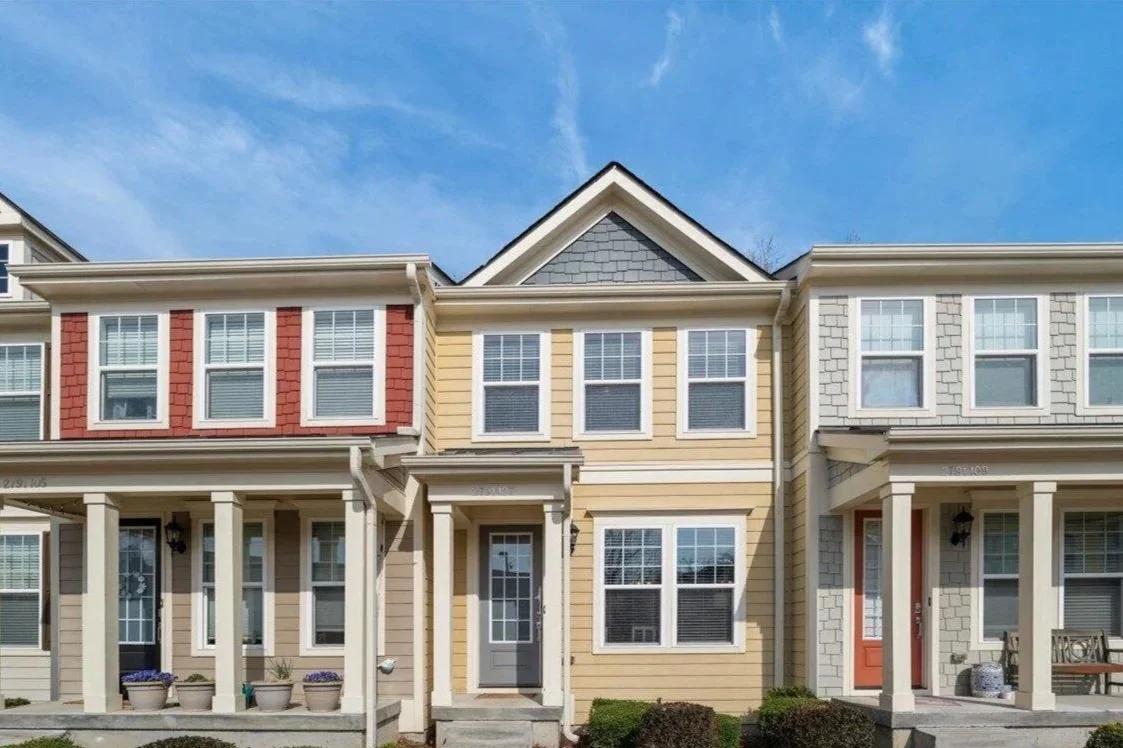
My honest note: at those price caps, a lot of Raleigh buyers using city help end up in a townhome or condo. That's a great first home, and I'd rather you know it now than fall for a house the program won't cover.
Wake County, outside Raleigh and Cary
If you're looking in Apex, Fuquay-Varina, Garner, Holly Springs, Knightdale, Morrisville, Rolesville, Wake Forest, Wendell or Zebulon, look at the Wake County Affordable Homeownership Program, run by DHIC.
Forgivable loans of up to $50,000 with no monthly payment
Household income at or below 80% of area median income (the same 2026 limits as Raleigh's)
Credit score of 640 or higher, no maximum sales price, and new construction qualifies
Homebuyer education is required, and you have to start with one of DHIC's approved lenders
Funding comes in rounds. The current round reopened in early August 2026, so check availability before you count on it
Cary
Cary is the odd one out. Homes inside Cary are excluded from the Wake County program, and the town doesn't run a separate down payment program, so Cary buyers lean on the two state programs.
City of Durham
Durham's Down Payment Assistance Program is the most generous in the Triangle.
Up to $80,000 toward down payment and closing costs for a primary residence inside Durham city limits
A 0% forgivable loan with a 15-year term
A maximum sales price of $400,000, updated in April 2026
First come, first served until program funds run out, and you apply through a participating lender
What I tell every first-time buyer before they call a lender
The programs are the easy part to find. The order you do things in is what decides whether you actually get the money. Here's the order I walk my buyers through.
Decide roughly where you want to live first. Local programs follow city limits, not mailing addresses. Plenty of homes with a Raleigh address sit outside Raleigh city limits, which changes which programs apply. If you're torn between areas, our Neighborhood Match Quiz is a good place to start.
Check your household income against the limits. Raleigh, Wake County and the state's $15,000 program are built around income caps. If you're over 80% of area median income, the NC Home Advantage Mortgage still goes up to $158,000.
Take the homebuyer class now, not after you find a house. Raleigh and Wake County both require it. Buyers who wait until they're under contract are scrambling for a certificate while the clock runs.
Call a lender who is approved for the programs you want. Not every lender can offer every program. Raleigh and Wake County each publish an approved lender list, and the state programs only run through participating lenders. Ask them directly: "Are you approved for NCHFA, the City of Raleigh program and the Wake County program?"
Ask the lender to show you more than one version. Ask to see the numbers with and without assistance, and the 3% option next to the $15,000 option. The biggest number isn't always the best fit for how long you plan to stay.
Know the strings before you fall in love. Price caps, deed restrictions and repayment if you sell early should shape your search, not surprise you at closing.
Tell your agent which programs you're using before you write an offer. Assistance can affect your timeline and paperwork. I build that into the offer so it's a strength, not something the seller discovers later.
And one thing that isn't a program at all: in a lot of today's Triangle deals, asking the seller to help with closing costs is on the table. That's a conversation I have with every buyer.
Frequently asked questions
What first-time home buyer programs are available in North Carolina?
The NC Housing Finance Agency offers the NC Home Advantage Mortgage, with down payment help of up to 3% of the loan, and the NC 1st Home Advantage Down Payment, which gives $15,000 to first-time buyers and military veterans. Cities including Raleigh and Durham, and Wake County outside Raleigh and Cary, add their own programs.
How much down payment assistance can I get in Raleigh?
The City of Raleigh offers up to $45,000 anywhere in city limits, or up to $60,000 in targeted neighborhoods, for first-time buyers earning up to 80% of area median income. Many buyers can layer that with the state's NC Housing Finance Agency programs through an approved lender.
Is North Carolina's $15,000 down payment assistance a grant?
No. It's a 0% interest second mortgage with no monthly payments. It's forgiven 20% a year in years 11 through 15. If you sell, refinance or move out before year 15, you repay the balance that hasn't been forgiven yet.
What credit score do I need for NC first-time buyer programs?
The NC Home Advantage Mortgage, the state's $15,000 program and the Wake County program all require a credit score of 640 or higher. Your lender may set its own requirements on top of that.
Who counts as a first-time home buyer in North Carolina?
For most programs, it's anyone who hasn't owned a home in the last three years, even if you owned one before that. Military veterans can qualify for the state's $15,000 program even if they've owned before.
Can I combine down payment assistance programs in North Carolina?
Often, yes. The City of Raleigh notes that buyers who qualify for its program will likely qualify for NC Housing Finance Agency programs too, and its approved lenders can layer them. Each program has its own rules, so ask your lender to show you the combined numbers.
Is there down payment assistance in Cary, NC?
Cary buyers can use the two statewide programs from the NC Housing Finance Agency. Homes inside Cary are excluded from the Wake County Affordable Homeownership Program, which covers other Wake towns like Apex, Holly Springs and Wake Forest.
Let's figure out what you qualify for
If you've been telling yourself you're a year or two away, you might be closer than you think. I'd love to sit down with you, walk through which programs fit where you want to live, and connect you with lenders who actually work with them.
Reach out to our team and let's talk it through. Not sure which part of town fits you yet? Start with our Neighborhood Match Quiz.
Program amounts, income limits and price caps are as of October 2026 and change, often each summer. I'm a real estate agent, not a lender, so confirm current terms with a participating lender before you make decisions.
